Analysis
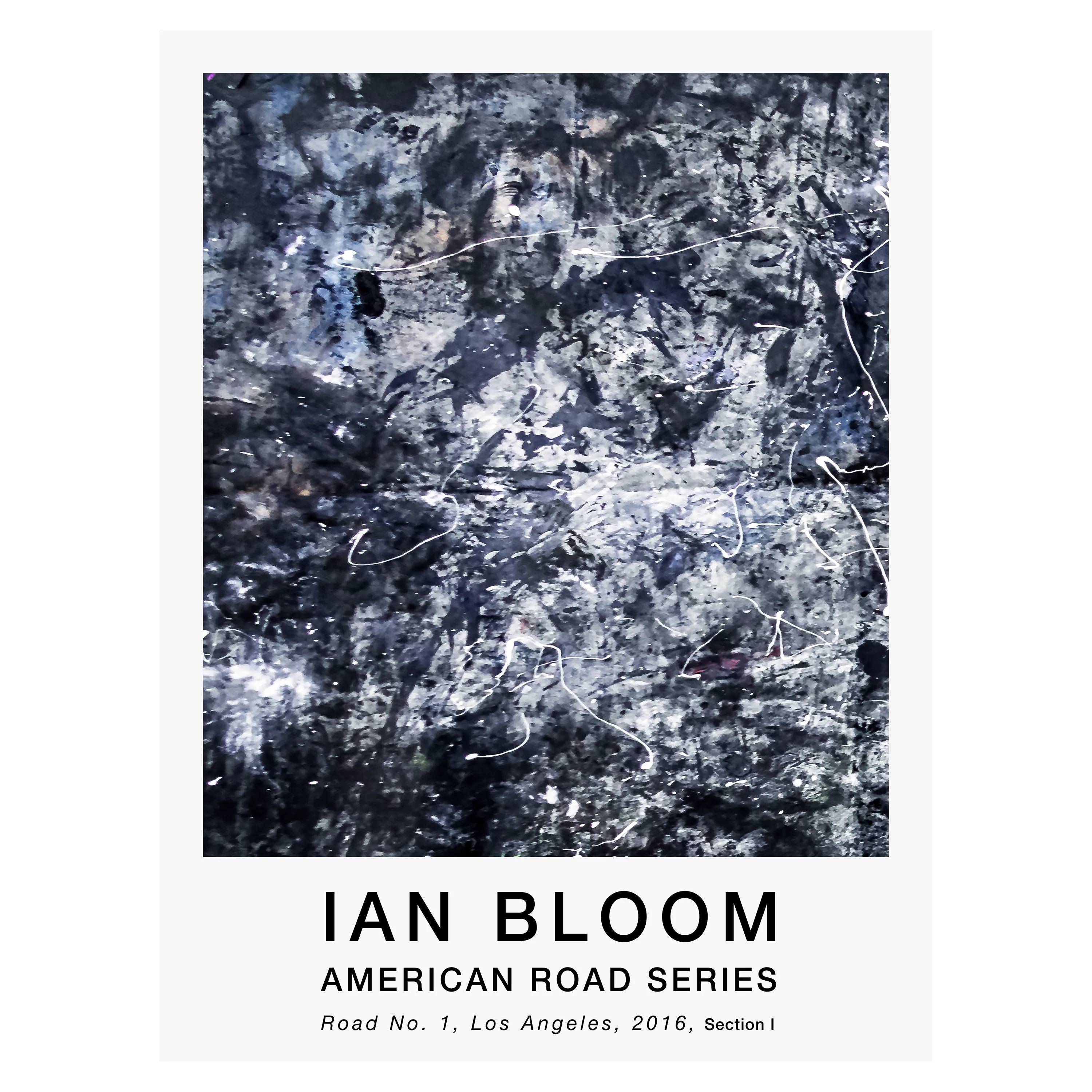
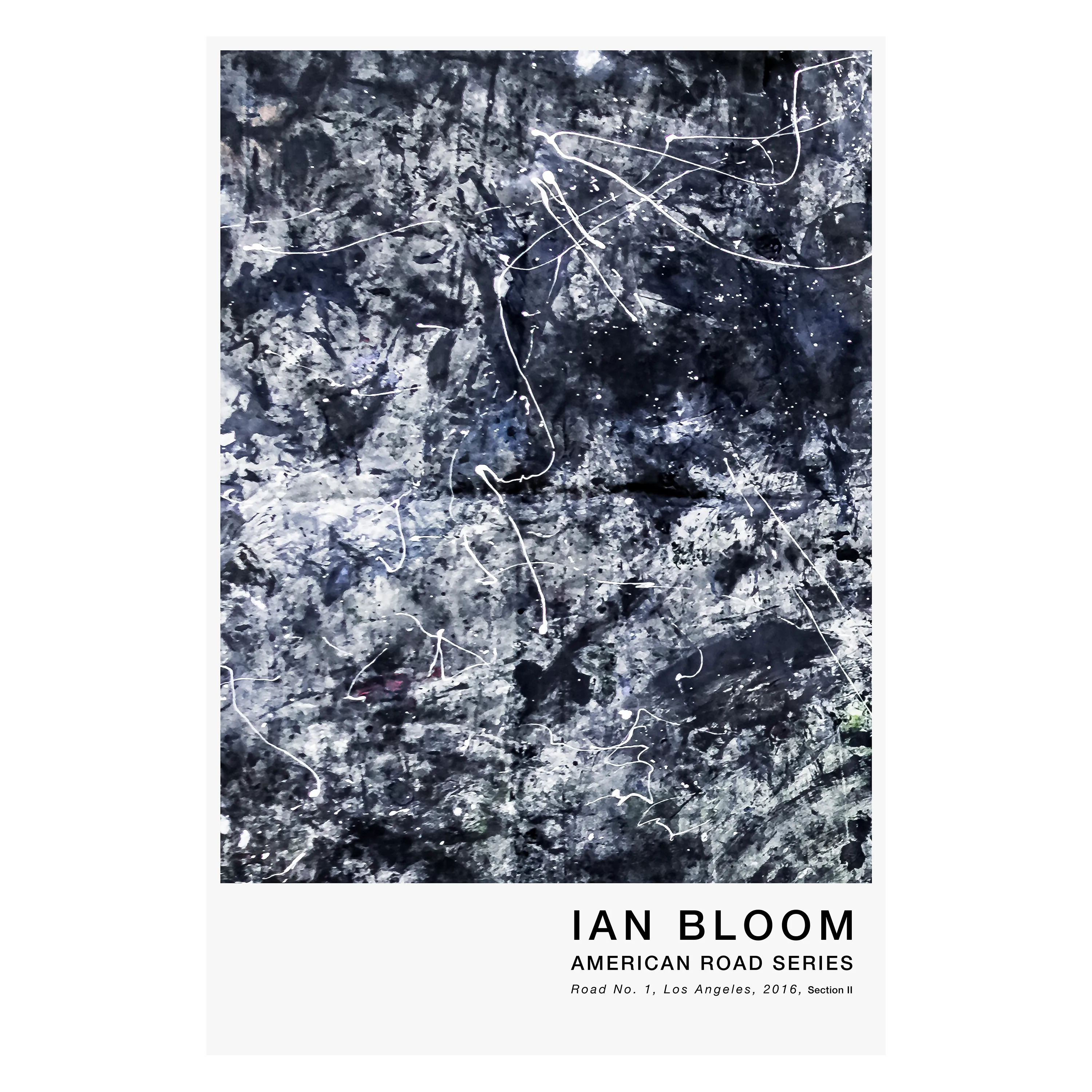
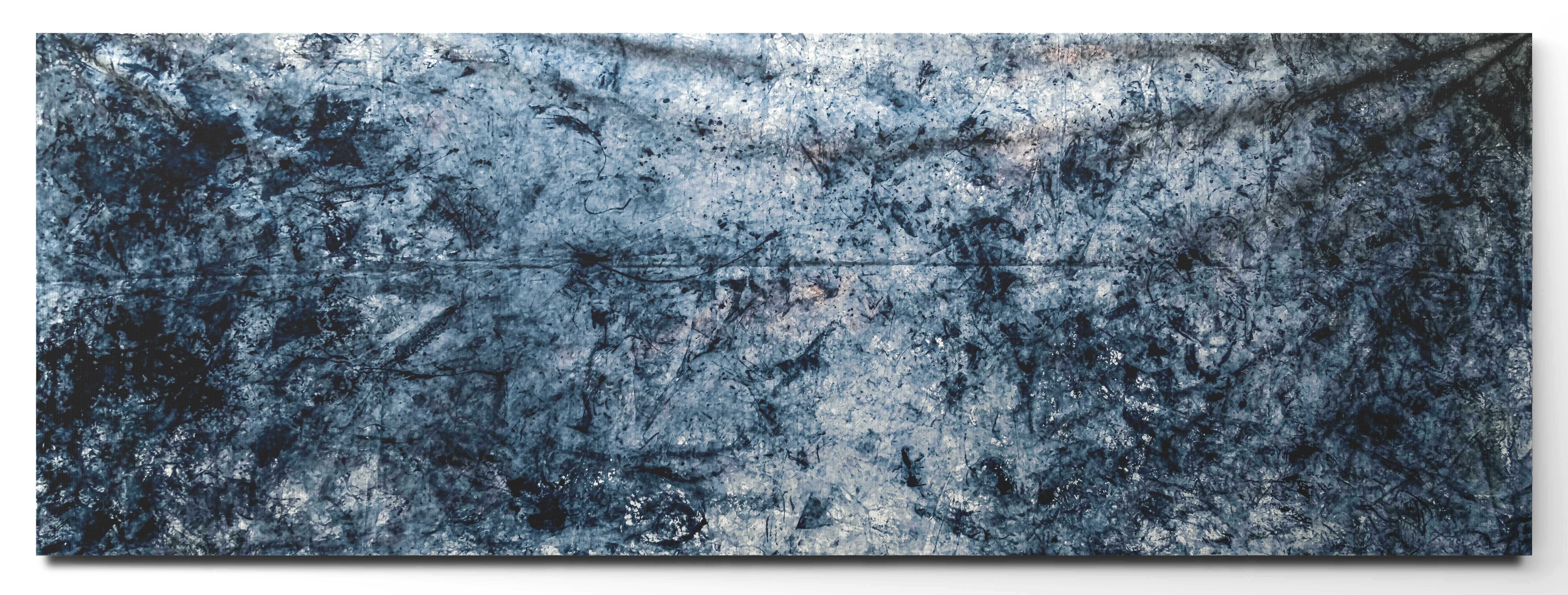
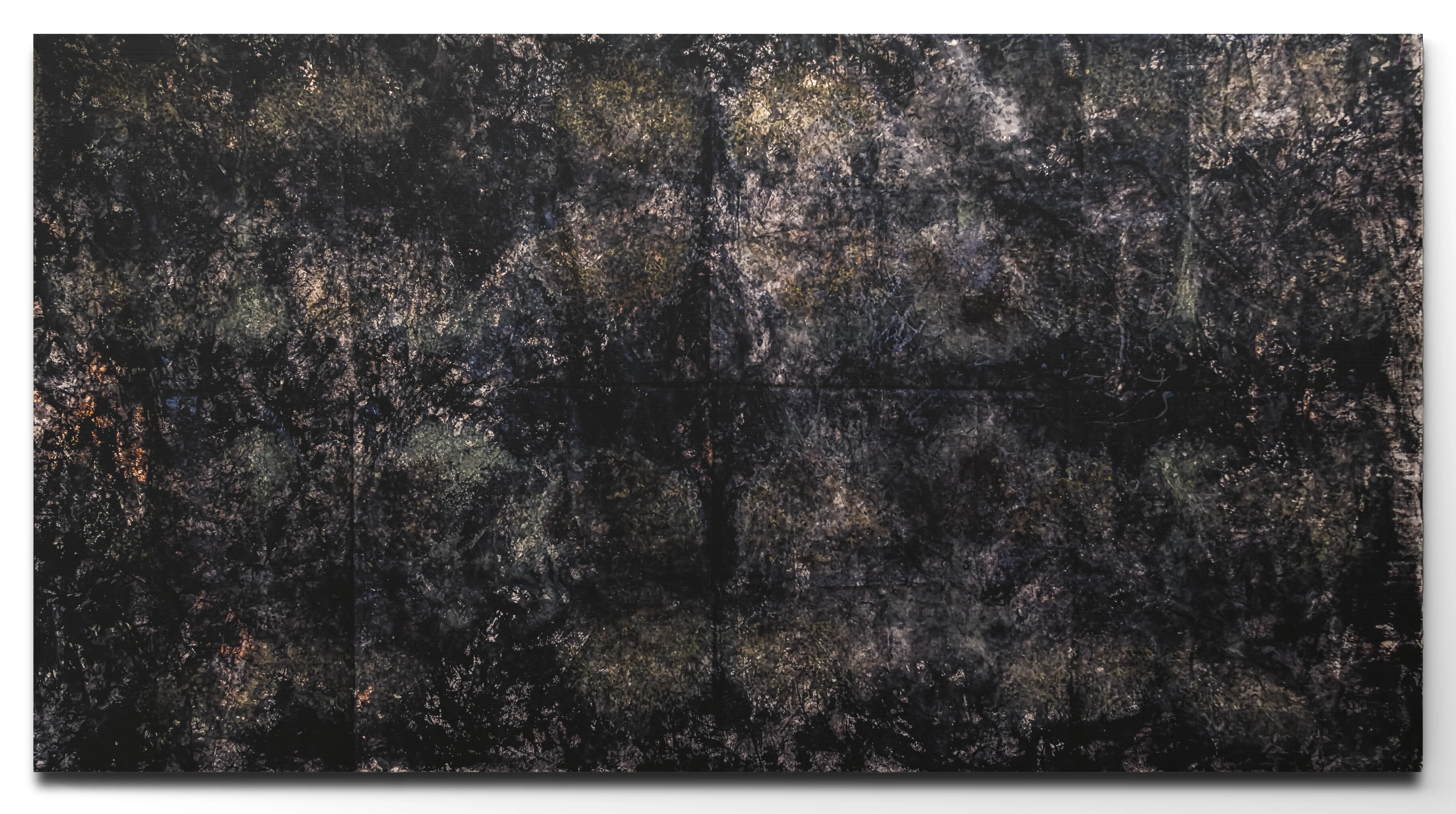
The strongest way to read Road No. 1 is as a painting of formalized aftermath. It is full of energy, but crucially, it is not energetic in the casual sense. The force here has already passed through the field. What remains is a dense, territorial surface marked by abrasion, interruption, and survival. That distinction gives the work its authority. It does not perform catastrophe. It presents a world after catastrophe has already entered form.
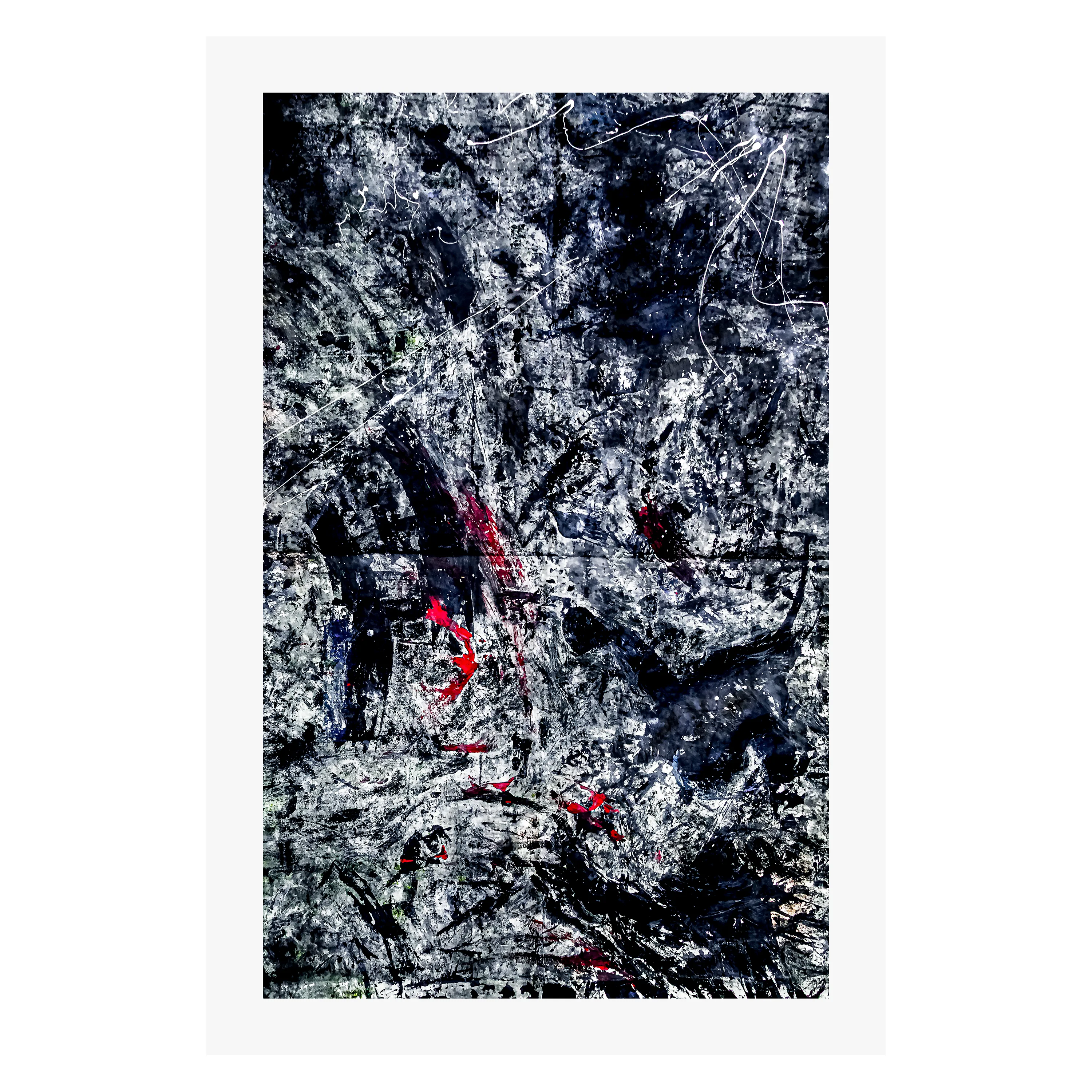
Formally, the painting is built through a hard opposition between black structure and ashen atmosphere. The black marks do not simply outline forms or punctuate the surface. They occupy it with weight. Some read as dragged bars or impacts, others as charred branches or bent infrastructural remnants, but none resolve into clear depiction. This is exactly right. The painting gains force by hovering between material fact and ruined suggestion. It never lets the viewer settle into narrative certainty.
The white and grey passages do a more complex job than first appears. They are not just grounds against which the black can read. They are fields of turbulence in their own right, scraped, clouded, layered, and interrupted by fine lines that look almost like sketching under duress. These passages create the work's weather. Without them, the painting would become merely heavy. With them, it becomes unstable and alive, a surface in which darkness has to fight continuously for dominance.
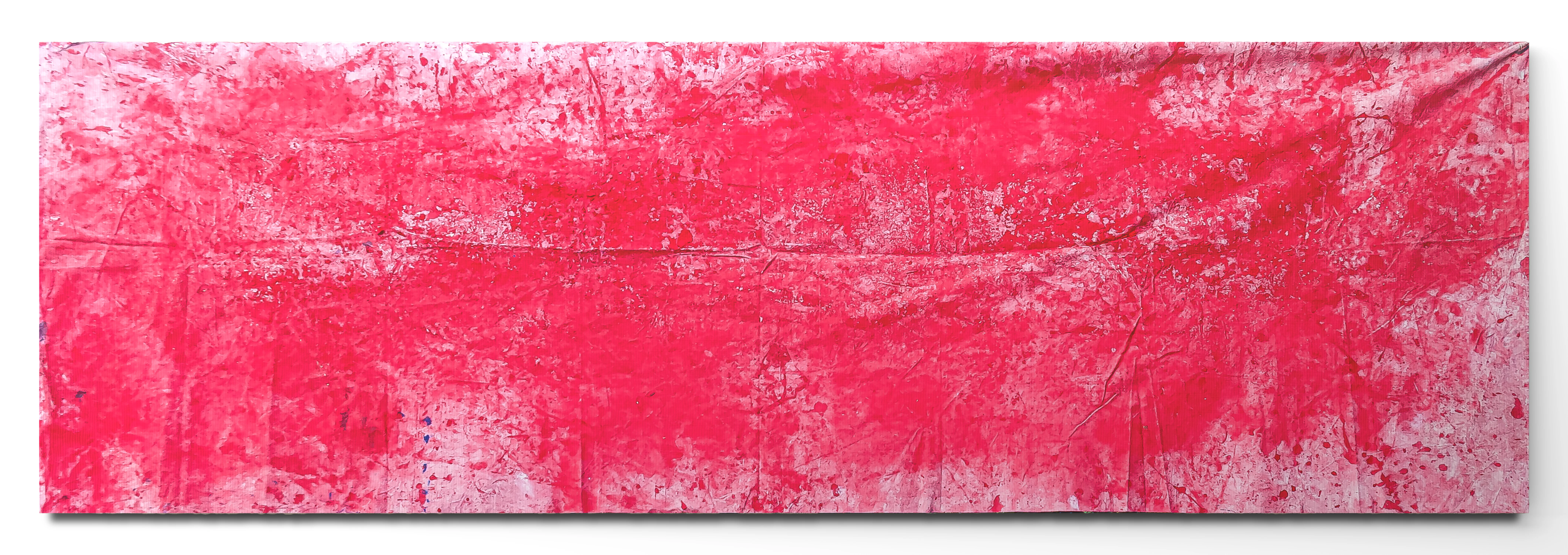
Then there is the red. Bloom uses it with unusual intelligence here. It appears in concentrated bursts, not spread evenly, and because of that it carries disproportionate charge. The red does not beautify the surface. It injures it. It forces the viewer to register certain zones as active, unresolved, and still hot. These are not accents. They are points of irreversible consequence.
The panoramic scale is essential. Road No. 1 needs width because its logic is territorial. It is not a painting of one incident; it is a field across which multiple impacts have been absorbed and arranged. The horizontal sprawl allows the eye to travel through distinct zones of density, exposure, and interruption, yet the work never fragments into separate scenes. It holds as one total image. That is a major achievement. Many wide abstract paintings become episodic. This one becomes continuous.
There is also a striking refusal of softness in the work's handling. Even the more atmospheric passages remain severe. Nothing here is decorative, and nothing asks for lyric permission. The painting earns every interval of openness through abrasion. That is why it feels exact in the deepest sense: not polished, but exact. It knows what to leave unresolved and what to lock down.
Historically, the work belongs to that harder line of abstraction in which gesture is only convincing once it has ceased to be theatrical. The brushwork here is never “expressive” in the flattering sense. It is functional, consequential, and pictorially answerable. One senses a painter who no longer trusts energy by itself and therefore subjects every mark to the larger authority of the field. This is one reason Road No. 1 reads as mature. It does not need excess to prove conviction.
As an object, it has real black gravity. The painting can command a room because it presents itself as something already tested. The surface does not look provisional. It looks endured. That gives the work force beyond the strictly formal. One wants to live with it because it seems to have survived what lesser paintings merely dramatize.
In the larger Ian Bloom record, Road No. 1 stands as one of the major paintings because it clarifies the road cycle at full pressure. If Road gives afterimage, Road No. 3 gives nocturnal density, and Fire and Ocean separate heat from depth, Road No. 1 gives collision as the canon's black fact. It is the painting where asphalt, smoke, force, and wound fuse most decisively into a single abstract language. That is why it belongs near the top of the painting stack.