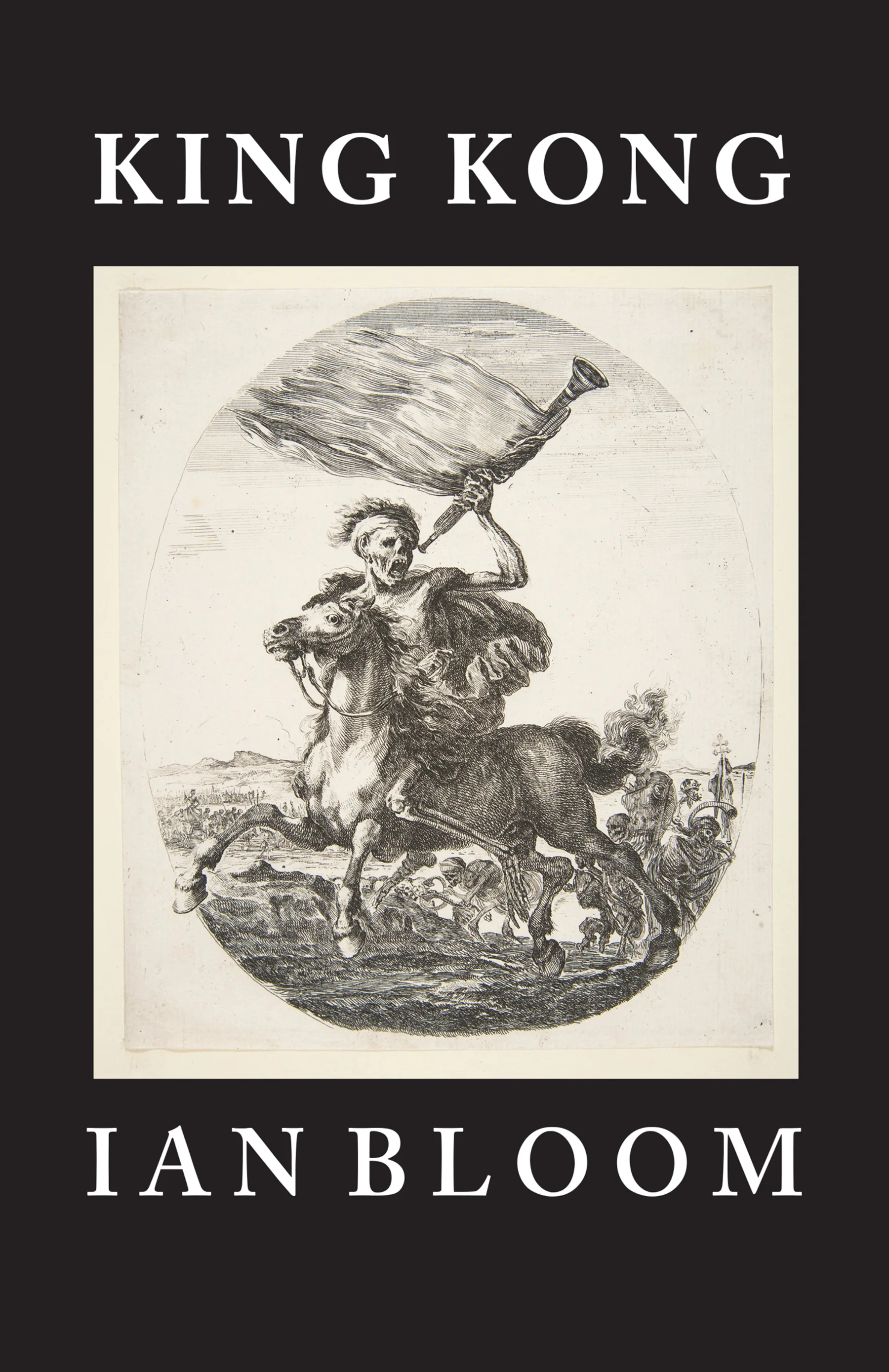
King Kong
Ian Bloom wrote King Kong at 34 across Tokyo, Zürich, Bern, Frankfurt, Paris, and St. Moritz—moving through cities with the calm of a professional and the cold awareness that nothing waits. Built during a period of disciplined private work—holdings, trusts, systems, music—the novel carries that same sealed intensity: heavy, quiet, irreversible.
King Kong isn’t an animal story—it’s a scale story: what happens when a man’s internal engine finally matches the world’s weight. Grief becomes acceleration. Desire becomes protocol. Morality becomes a ledger—and the ledger becomes scripture. Set between Hollywood’s masquerade and Switzerland’s vault-calm, between Tokyo’s civil perfection and Paris’s cathedral glare, Bloom’s antihero—half banker, half cowboy, half ghost—moves through a chain of events that can’t be undone: a death call from the past, a funeral staged as ritual, love arriving too late, and encounters that feel like tests administered by invisible institutions.
Bloom’s singular proposition is blunt: God and the Devil aren’t metaphors—they’re counterparties. They negotiate through timing. They collect payment through consequence. And by the end, King Kong becomes a coronation in smoke and steel—the moment the man realizes he isn’t being chased by fate. He is fate. A sovereign noir epic. A resurrection manual disguised as a novel. The final question isn’t “Do you believe?” It’s: Who’s been driving your life—and what did it cost to stay inevitable?
- Language: English
- Pages: 180
- Format: Hardcover
- Edition: First edition
- ISBN-10: 1944527478
- ISBN-13: 978-1944527471
- Item weight: 15.7 oz
- Dimensions: 5.83 × 0.63 × 8.27 in