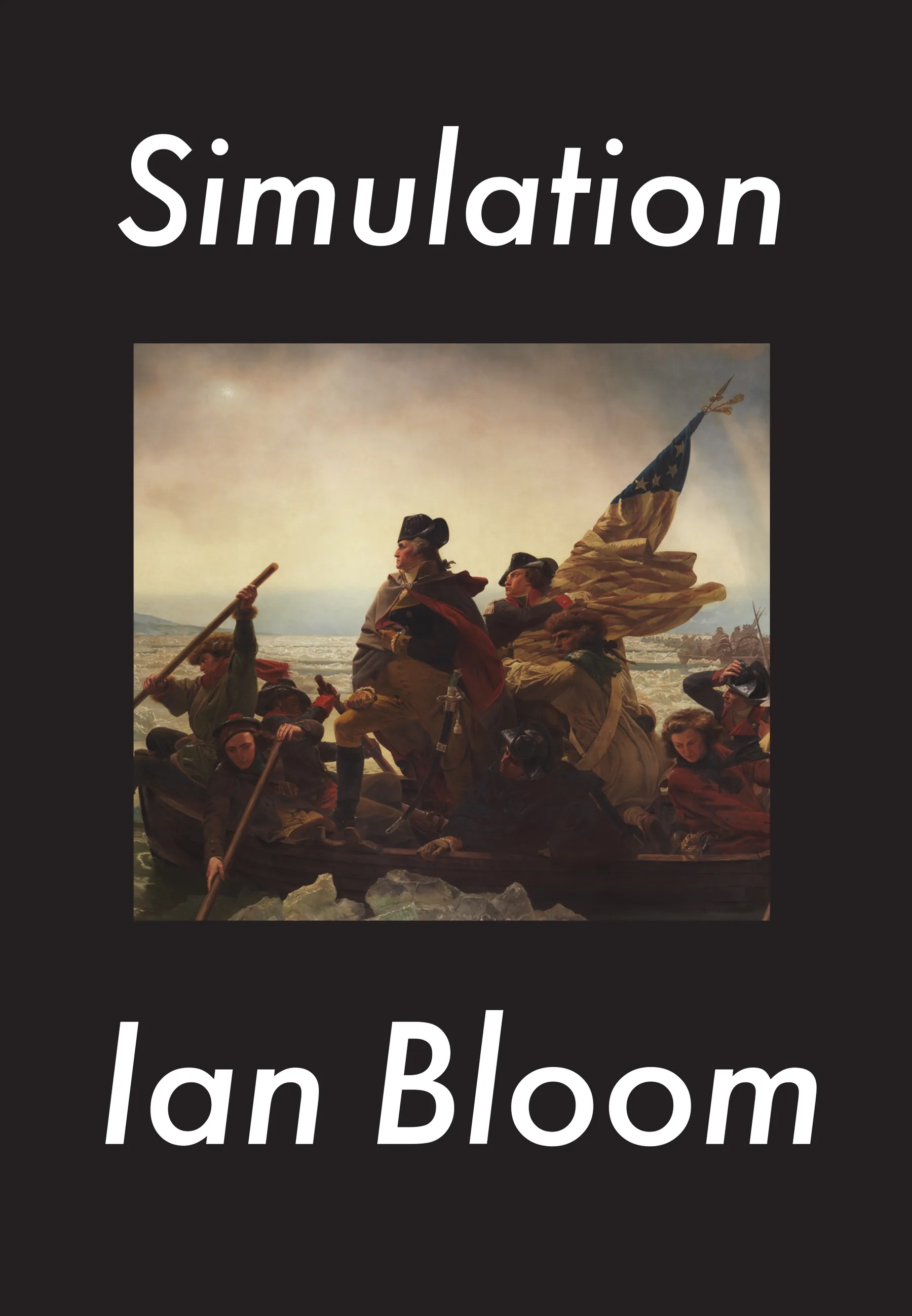
Simulation
Ian Bloom wrote Simulation at age 25, stationed in the dream-state of Los Angeles, post-Atlanta film haze—ripping golf carts across Universal Studios, smoking in trailers, collecting commissary rituals and movie-star smiles like shrapnel. A war poet in paradise.
Simulation is a war movie inside a war movie inside the war: identity, fame, trauma, and resurrection run through a projector loop where a veteran becomes a stuntman, then a movie star, then a national myth—then something stranger. In the lineage of Network, The Manchurian Candidate, and 8 1/2, the story dissects the simulation of American power with a grin, a blade, and a camera rolling.
From the wreckage of Iraq to the backlots of Hollywood, Bloom's alter ego Cal Vallens rises—and comes apart—in a story where every line might be ADR, and every gesture might be a cue. Manufactured consent. Tabloid crucifixions. Existential showbiz. A metaphysical epic that plays like Catch-22 by way of Kubrick, then Tarantino, filtered through a soldier's haunted conscience.
Written in the high style of lived hallucination, Simulation is a transmission from inside the machine.
- Publisher: Natural Press
- Publication date: March 9, 2026
- Language: English
- Pages: 152
- Format: Hardcover
- ISBN-10: 1944527060
- ISBN-13: 978-1944527068
- Item weight: 14.1 oz
- Dimensions: 5.83 × 0.56 × 8.27 in